For many years, a musician’s website worked like a simple online poster. It showed tour dates, a short bio, and links to buy merch. However, things are changing fast. As Web3 grows, these websites are turning into powerful digital hubs. Now, artists can use blockchain and NFTs to control their work and connect directly with fans.
Because of this shift, websites are no longer just for information. Instead, they help artists manage their careers in a new way. They also give more power to creators, not big platforms. This change matters a lot for the future of music.
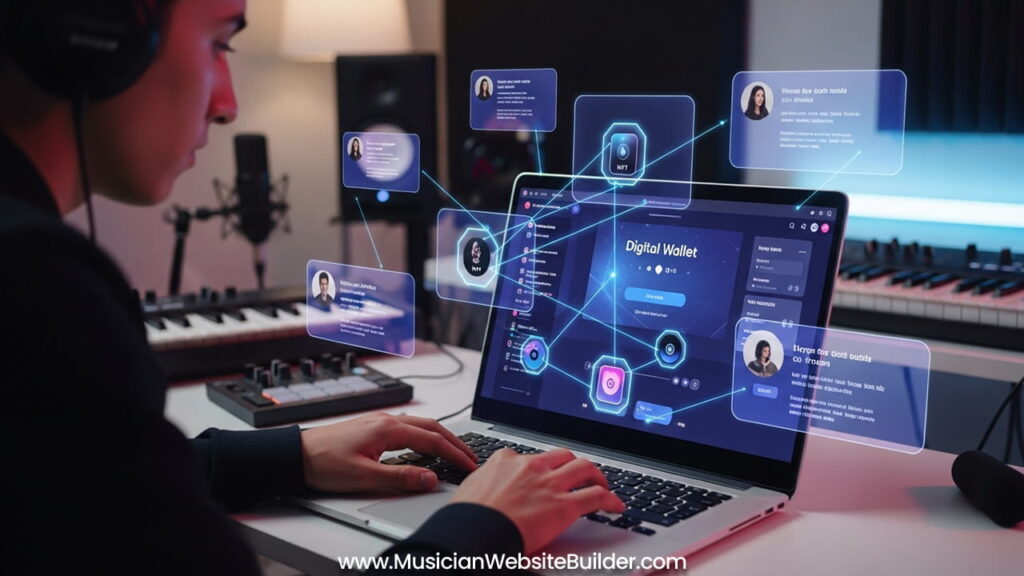
The Evolution of the Musician’s Digital Home
In the past, most musicians depended on platforms like social media and streaming services. This model is often called “renting land.” That means artists do not fully own their audience. If a platform changes its rules, artists can lose reach quickly.
For example, if an algorithm changes, fewer fans may see updates. Also, if a platform shuts down, all connections may disappear. So, this setup creates risk for musicians.
On the other hand, Web3 brings a different idea. It shifts control back to the artist’s own website. Now, the website becomes the main place for fan interaction. Instead of relying on third parties, artists can build direct relationships.
As a result, the website is no longer just a page. It becomes a central space for content, communication, and value exchange.
Integrating Web3: The Decentralized Hub
Web3 websites change how users interact online. In the past, people only viewed content. Now, they can take part in the system.
Because of this, websites become more active and user-driven. Fans do not just visit; they engage and own parts of the experience.
Wallet Integration as the New Login
Traditionally, users sign up with email and passwords. However, Web3 replaces this with digital wallets. Fans connect wallets like MetaMask or Coinbase Wallet.
Once connected, the website can check what digital assets the fan owns. This helps create a custom experience. At the same time, it avoids collecting personal data.
So, privacy improves while personalization stays strong. This balance is important in modern web design.
IPFS and Censorship-Resistant Content
Another key feature is IPFS, which stands for InterPlanetary File System. It allows content to be stored across many systems, not just one server.
Because of this, content becomes harder to remove or lose. Even if one hosting service fails, the data stays available.
Some artists now use IPFS to host music and even full websites. This makes their work more secure and long-lasting.
NFTs as the Core Utility of the Modern Website
At first, many people focused on NFT prices. However, the real value of NFTs lies in how they are used.
NFTs are not just digital art. Instead, they act as tools that unlock features and experiences.
Token-Gated Experiences
One of the biggest changes is token-gated content. This means only users with certain NFTs can access special areas.
For example, fans with a specific token may unlock:
- Unreleased demo tracks
- High-quality livestream concerts
- Early access to merch drops
- Priority ticket sales
Because of this system, fans feel more connected. At the same time, artists can reward loyal supporters.
So, NFTs create a new type of fan experience. It is more personal and more valuable.
Smart Contracts and Secondary Market Royalties
In the past, artists earned nothing from resales of physical items. For example, if a rare vinyl was sold again, the artist got zero profit.
However, smart contracts change this. These are programs stored on the blockchain. They can automatically send a percentage of resale value back to the artist.
Because of this, artists earn money even after the first sale. This creates long-term income.
Also, it rewards early supporters. As the artist grows, the value of early items may increase. Everyone benefits from this system.
Bridging the Gap: The Hybrid “Web2.5” Approach
Even though Web3 offers many benefits, the full shift will take time. Not all users understand blockchain yet. So, many artists use a hybrid model called Web2.5.
This approach mixes old and new systems. It keeps things simple while adding Web3 features in the background.
For example, a fan may buy music using a credit card. After that, they may receive an NFT without extra steps.
Because of this, the process feels easy. At the same time, fans get added value.
This method helps more people join Web3 slowly. It removes fear and confusion.
Also, it allows artists to test new tools without losing current users.
A Satisfying Future for Artists and Fans
The move toward Web3 and NFTs creates a better system for both artists and fans. It gives artists control over their work and income. At the same time, it offers fans deeper and more meaningful experiences.
Because websites now act as full ecosystems, they support many functions. They handle content, sales, community, and ownership in one place.
So, the role of a musician’s website has changed a lot. It is no longer just a place to check tour dates. Instead, it is the base of a digital career.
In the future, more artists may adopt this model. As technology improves, these systems may become easier to use.
As a result, the music industry may become more fair. Artists keep more value, and fans gain more access.
This shift shows a clear direction. Control is moving away from large platforms and back to creators. That change will shape the next stage of music online.