Writing about yourself as an artist can feel harder than stepping on stage in front of a thousand people. Many musicians can write songs that move hearts, but when it’s time to describe who they are, the words just don’t come. That empty page feels like a test you didn’t study for.
But here’s the truth: your artist bio isn’t just a boring task—it’s one of your most powerful tools. It’s the first impression you give to fans, journalists, or promoters. It’s the digital handshake that can open doors to new gigs, press features, and deeper fan connections.
Your goal isn’t to write something fancy. Your goal is to write something real, something that tells your story in a way that connects.
Why Your Artist Bio Matters
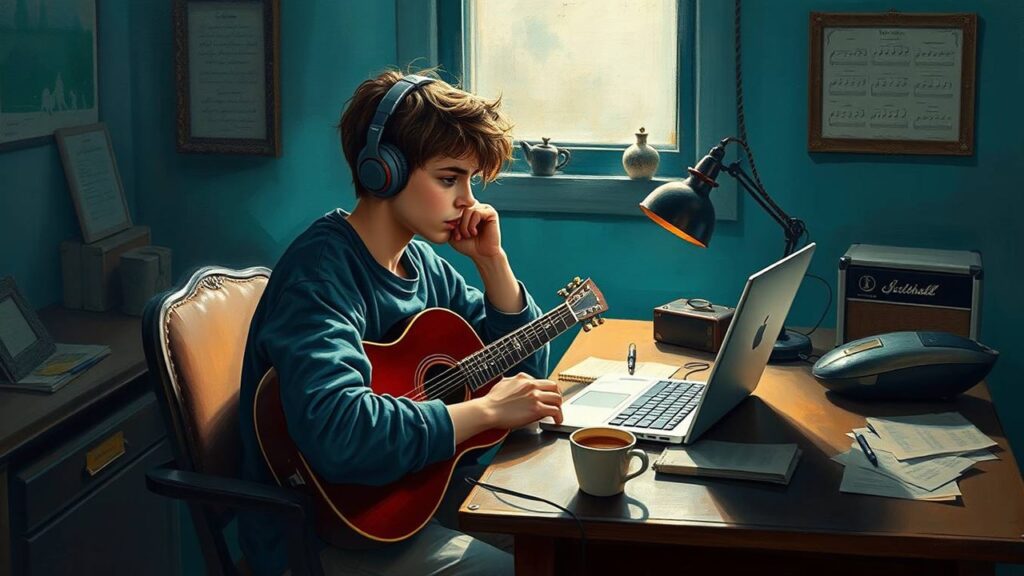
Your bio is more than just a list of facts. It’s your story. It shows people who you are, what inspires you, and why they should care about your music. Without it, you risk getting lost in the endless stream of profiles online.
- First impression: Often, it’s the first thing bookers, journalists, or fans read.
- Landing gigs and press: Writers and promoters look for stories to tell. A good bio gives them that angle.
- Building connection: People don’t just connect to music—they connect to stories. Your bio shares the “why” behind your sound.
The Three-Tier Bio Approach

Using one bio everywhere is a mistake. You actually need three versions of your bio, each serving a different purpose:
1. Short & Sweet Bio (For Social Media and Streaming)
Just one or two lines. Perfect for Instagram, TikTok, Spotify, and similar platforms. Mention your name, genre, and one unique detail.
Example: “[Artist Name] is an indie-folk artist from Austin, TX, whose heartfelt lyrics tell stories of travel and belonging.”
2. Mid-Length Bio (For Websites and Profiles)
One or two short paragraphs. Share your story, influences, and recent wins.
3. Detailed Bio (For Press Kits and Grants)
A full story. Include career milestones, tours, awards, big shows, and press quotes.
5 Essential Elements of a Strong Bio
Every great artist’s bio should answer these questions:
- Who are you? (Name and genre)
- What’s your story? (How you started and what drives you)
- What have you done? (Releases, awards, tours, collabs)
- What do you sound like? (Describe your music vividly)
- What’s next? (Upcoming releases, projects, tours)
Beating Writer’s Block: The Self-Interview Trick
If writing feels impossible, talk instead of typing. Record yourself answering a few questions, then write them out later. Speaking naturally brings out real stories and emotions.
Ask yourself:
- How did I start making music?
- What’s the message I want people to take from my songs?
- What funny or memorable moments have happened on tour or in the studio?
When you listen back, you’ll hear natural sentences you can use in your bio.
Finding the Right Voice
You’ll need both first-person and third-person bios.
- Third person (“[Name] is a singer-songwriter…”) is standard for press and professional use. It sounds confident and polished.
- First person (“I am a singer-songwriter…”) works better on social media. It feels personal and direct.
A good tip: write your bio in first person first. Then rewrite it in third person for formal use.
Example of a Polished Bio

Here’s how a bland bio can transform into something powerful:
Before: “[Artist Name] is an indie-folk singer-songwriter based in Asheville, NC. She writes and performs songs on her acoustic guitar.”
After: “[Artist Name] walked away from a life of spreadsheets and corporate ambition to find her voice in the Appalachian mountains. Her music—an intimate blend of folk melodies and raw, confessional lyrics—reflects the courage it takes to follow your own path.”
The second one doesn’t just list facts. It tells a story, which makes people care.
Keep It Updated: Your Bio is a Living Document
Your bio grows with you. Every new single, album, award, or show is a chance to refresh it. Don’t let it sit unchanged for years.
Start small. Even one strong sentence can break the barrier and get you moving. Remember, you don’t need perfect grammar or flowery words—you just need to tell your story honestly.