For independent musicians today, a website does much more than display music and tour dates. It works as the center of the entire music business. Streaming income and merchandise sales still matter. However, depending only on those income sources can create problems because streaming platforms, social media algorithms, and touring markets change often.
Because of that, many successful musicians build multiple income streams. One smart and often ignored method is selling professional services directly through the artist website. These services can include audio mixing, mastering, music production, or private lessons.
This guide explains how musicians can add service-based business pages to a fan-focused website without hurting the main artist brand.
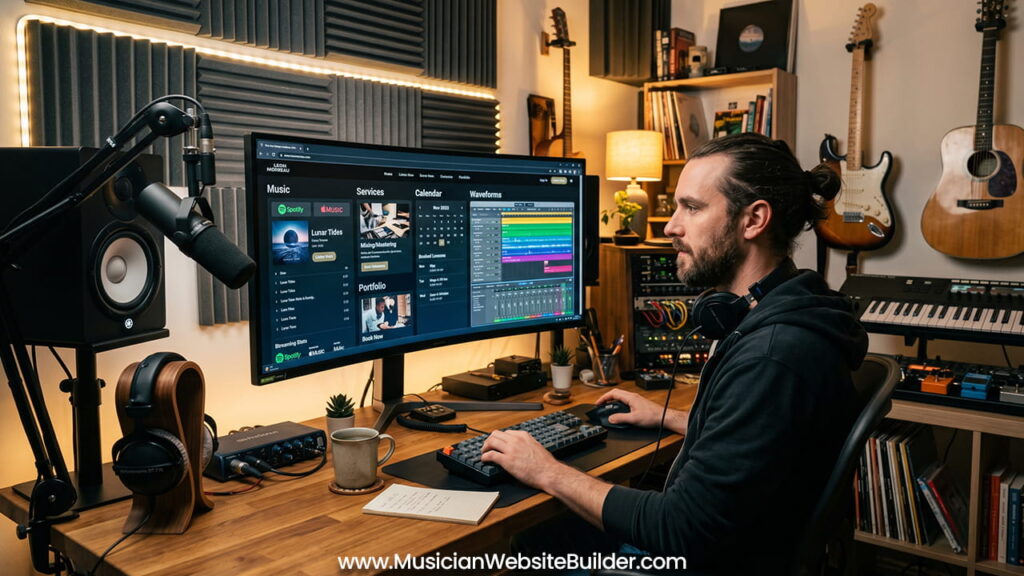
1. Understanding a Dual-Purpose Musician Website
Many artists worry that adding service pages could confuse visitors. Some fear that fans may lose interest after seeing technical studio content. Others think potential students may not trust a music teacher whose homepage mainly shows live concerts and music videos.
A good website structure solves this problem. Clear design and simple navigation help both audiences feel comfortable.
Keeping the Fan Experience Simple
The homepage should mainly focus on fans. It should highlight the newest release, tour dates, videos, merchandise, and email sign-ups.
Instead of placing technical service names everywhere, the navigation should stay clean and professional. Simple labels work best because they guide visitors naturally.
| Target Audience | Desired Action | Navigation Label |
|---|---|---|
| Music Fans | Listen to music, buy merch, view tour dates | “Music”, “Tour”, “Store” |
| Indie Artists and Bands | Hire mixing or production services | “Services”, “Studio”, “Mixing” |
| New Musicians and Students | Book lessons or workshops | “Lessons”, “Education”, “Learn” |
This structure keeps the fan experience smooth while still allowing service clients to find the right pages easily.
Building Dedicated Service Pages
Service promotions should not dominate the music homepage. Instead, each service should have its own landing page.
For example, when another artist clicks on “Mixing,” the page should immediately focus on studio work, production quality, pricing, and portfolio examples. The language should speak directly to musicians and creators rather than casual fans.
At the same time, the visual style should still match the overall artist brand. The website should feel connected from page to page.
2. Smart Cross-Selling Strategies
Cross-selling works best when it feels helpful instead of aggressive. Visitors already interested in the music are more likely to trust related services.
A listener may enjoy a song and become curious about the production quality. Another fan may want to learn how to play a favorite track. These moments create natural opportunities for service offers.
Promoting Mixing Services to Other Artists
An artist’s own music is the strongest advertisement for mixing and mastering services. Every song on the website already acts as a portfolio example.
When musicians listen to tracks, they often pay attention to the mix quality, vocal clarity, drum balance, and overall sound design. Because of that, website content can guide them toward studio services naturally.
Using Behind-the-Scenes Content
Behind-the-scenes posts work very well for attracting mixing clients. Blog articles or short videos can explain how certain tracks were mixed or produced.
For example, a post may discuss:
- Vocal processing chains
- Drum compression settings
- Reverb choices
- Mastering adjustments
- Stereo imaging techniques
This type of content gives useful information to other producers and musicians. At the same time, it proves technical skill and professional experience.
Adding Smart Call-to-Action Sections
Small call-to-action sections can increase conversions without annoying visitors.
For example, a track breakdown page could include a short message like:
“Like the sound quality on this track? Book a mixing session here.”
This approach feels natural because it connects directly to the content already being viewed.
3. Selling Music Lessons Through the Website
Music lessons can attract two main groups:
- Fans who want to learn favorite songs
- Musicians who want to improve their skills
Because of this, educational services fit naturally into many artist websites.
Using Tabs and Sheet Music
Chord charts, guitar tabs, synth patches, and sheet music create strong lesson opportunities.
Visitors already trying to learn a song may need additional help. A lesson offer placed near the learning material feels useful rather than promotional.
For example, a page teaching a guitar riff could end with:
“Need help learning this solo? Book a private Zoom lesson.”
This type of message connects directly to the visitor’s current goal.
Reaching Peer Musicians
Lessons should not only target beginners. Intermediate and advanced musicians may also look for help with songwriting, recording, arrangement, production, or performance skills.
Because of that, lesson pages should clearly explain what topics are available and who the lessons are designed for.
4. Technical Setup and Website Optimization
A strong cross-selling strategy depends on simplicity. Visitors should be able to understand services, check availability, and complete bookings quickly.
Long email chains and unclear pricing often reduce conversions.
Using Interactive Audio Portfolios
Mixing and mastering services require proof of quality. Written descriptions alone are usually not enough.
Interactive audio examples help potential clients hear the difference between rough recordings and finished mixes.
Audio comparison tools allow users to switch between the original demo and the completed master in real time. This creates immediate trust because visitors can hear the improvement clearly.
Strong portfolios often convert visitors faster than long sales pages.
Automating the Booking Process
Manual scheduling wastes time for both the artist and the client. Automated booking systems create a smoother experience.
Tools such as Calendly, Acuity Scheduling, and Squarespace Scheduling allow visitors to:
- Select available time slots
- Choose time zones automatically
- Fill out intake forms
- Submit payments securely
Everything happens in one session, which reduces friction and increases completed bookings.
Using Intake Forms Properly
Intake forms improve session quality. They collect useful information before the appointment begins.
For example, mixing clients may need to answer questions like:
- Which DAW is being used?
- How many stems are included?
- What reference tracks match the desired sound?
Lesson students may answer questions about:
- Current skill level
- Musical goals
- Preferred genres
- Instrument experience
Some musicians also require rough demos before consultations. This preparation helps sessions start efficiently.
5. Avoiding Common Cross-Selling Problems
Selling services through an artist website can increase income greatly. However, poor execution may weaken the artist brand.
Several common mistakes should be avoided.
Preventing Brand Confusion
The website design should stay visually consistent. Colors, fonts, layouts, and images should feel connected across all pages.
For example, a dark alternative rock website should not suddenly switch into a bright corporate tutoring style. The transition between fan content and service pages should feel smooth.
Consistency builds trust.
Avoiding Too Many Promotions
Fans usually subscribe for music updates, tour announcements, and releases. Constant service advertisements may frustrate them.
Email lists should stay segmented whenever possible.
For example:
- Fans receive music and merch updates
- Studio clients receive production offers
- Students receive lesson information
This separation keeps communication relevant for each audience.
Balancing Pricing Transparency
Lesson pricing should remain simple and visible. Hourly or monthly rates help visitors make decisions quickly.
Mixing services usually work better with flexible pricing. A “Starting at” model often performs well because project sizes vary.
For example:
“Mixing starts at $X per track.”
More detailed projects can then move into custom quote discussions.
This balance keeps pricing clear while still allowing flexibility for larger sessions.
Conclusion: Turning Music Into Multiple Income Streams
An artist website does not need to function only as a fan page or only as a business platform. It can succeed as both.
Music already builds trust and attention. That attention can naturally lead into studio services, production work, or music education when presented correctly.
Dedicated service pages, clear navigation, automated booking systems, and useful educational content all help create stronger conversions.
When done properly, cross-selling does not push audiences away. Instead, it gives fans, musicians, and students the exact support they are already searching for.