The Professional Gap
Many skilled freelancers and independent contractors find themselves stuck. They deliver excellent work, yet they struggle to get consistent, high‑paying clients. The issue isn’t their skill—it’s their perceived credibility. In today’s digital marketplace, a professional online presence isn’t just nice to have—it’s your credibility stamp. This guide is for talented individuals ready to leave low‑value work behind and use their digital platforms to close that credibility gap, command higher rates, and attract premium contracts. Professionalizing your online footprint is the single most effective investment in future gig acquisition.
Foundation 1: Establishing the Core Digital Asset (Your Website)

While social media profiles are great for networking, a dedicated owned website remains the anchor of any truly professional online presence. It’s the only platform where you fully control branding, user experience (UX), and the critical conversion path.
The Non‑Negotiable Elements of a Portfolio Website
A professional musician website must act as a high‑performing sales tool—not just an art gallery. It must be clear, fast, and focused on the client’s needs.
Clear Value Proposition (The 3‑Second Rule):
Visitors must know what service you offer, to whom, and what core benefit you deliver—all within the first three seconds of landing on your homepage. Use precise, client‑focused language that speaks directly to their pain points or desired outcomes.
Simple Navigation and Load Speed:
A slow site or confusing menus will erode trust and drive visitors away. Prioritize speed optimization and intuitive, logical flow. Mobile responsiveness is critical since many users browse on mobile devices.
Dedicated “Services” or “How We Work” Page:
High‑paying clients want clarity in the process. This page should outline your onboarding, project execution, and deliverable expectations. It shows you are organized and predictable.
Structuring the Client Conversion Journey
A highly effective website structure is engineered to answer a visitor’s internal questions in order, guiding them from interest to a clear call to action.
Framework:
Problem → Solution → Proof → Call to Action
You start by highlighting the client’s pain point, then present your service as the remedy. Next, you provide robust evidence (testimonials, portfolio) that your remedy works. Finally, you invite the visitor to take the next step. Every page should contribute to this logical flow, making the transition from interested visitor to prospective client seamless. Clear CTAs on every page help convert prospects efficiently.
Foundation 2: Mastering the Proof Points (Credibility & Trust)
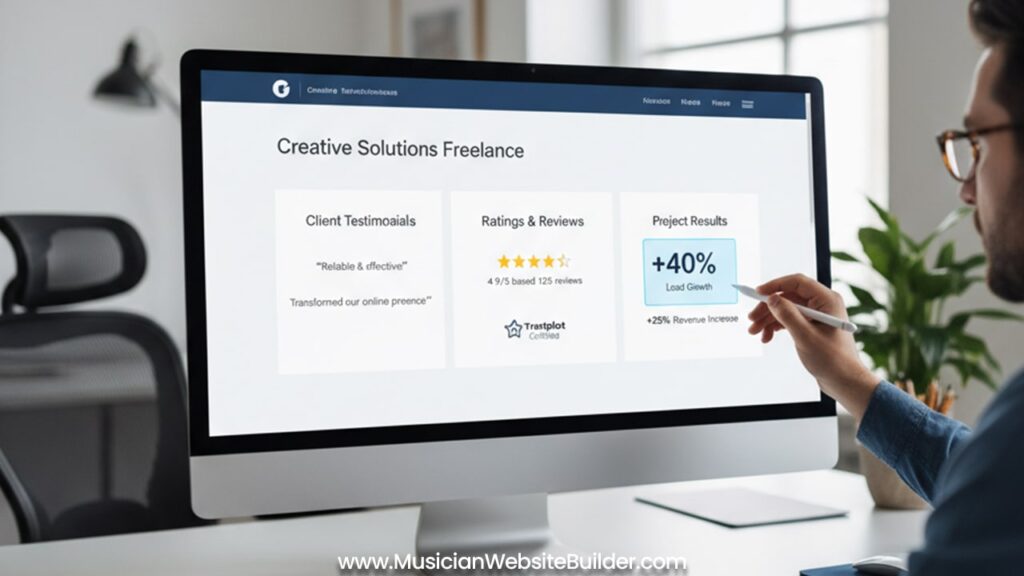
The difference between a freelancer and a consultancy often boils down to perceived authority. Authority grows when you use social proof strategically and showcase thought leadership.
Turning Testimonials into Conversion Tools
Many professionals collect generic testimonials (e.g., “Name was great to work with!”). High‑leverage testimonials are different—they directly address a potential client’s hesitation. Use The Three C’s of Testimonials:
- Clarity: The testimonial clearly states what service was provided (e.g., “The SEO strategy…”).
- Context: It describes before and after—what pain the client had and the measurable result achieved (e.g., “…increased our lead generation by 40% in two months.”).
- Credibility: Include the client’s full name, title, and company (with permission) to establish authenticity.
Unique Tip: When asking for feedback, ask specific, results‑oriented questions rather than generic ones. For example: “What was the most unexpected positive outcome of our work?” This helps produce testimonials that directly overcome objections and validate the value you delivered.
The Power of “Process” Over “Product”
A beautiful portfolio shows what you have made. A detailed methodology explains how you made it. High‑value clients often prioritize predictability and quality control.
Instead of only showing finished designs or articles, dedicate space to explain your client onboarding process, research phase, revision policy, and final deliverable structure. This transparency about how you work reassures clients and reduces perceived risk. Showing the client journey with visuals or flow charts further builds trust. Focusing on the user experience (for the client) differentiates a professional from an amateur.
Foundation 3: Strategic Social Media & Networking Profiles
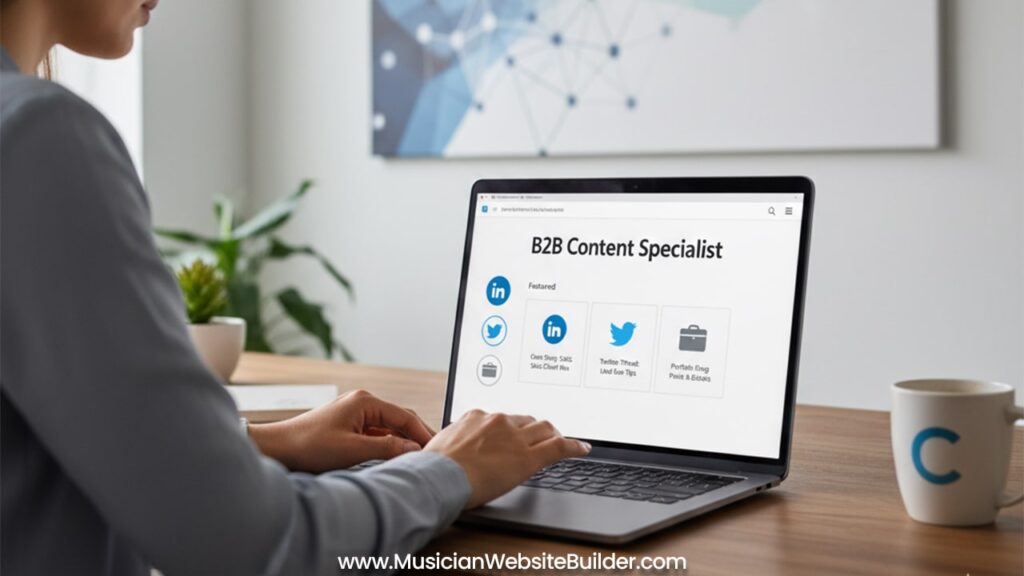
Public profiles—especially LinkedIn—serve as crucial vetting tools. They must align perfectly with the story your website tells.
The LinkedIn Priority: Optimization for Discovery
LinkedIn works like a massive search engine. You have to shift from a “job‑seeker” mindset to an “expert‑consultant” mindset. Naturally include long‑tail keywords tied to your niche services.
- The Headline: This is prime real estate. Avoid vague titles like “Freelance Writer.” Use specific value propositions: “B2B SaaS Content Writer specialising in Lead Generation.”
- The Summary: Use this space to state the type of clients you serve and the unique benefits you bring, linking back to your core services in clear words.
- The Featured Section: Use this area to link directly to high‑converting pages on your website, notable portfolio pieces, and key thought leadership articles. Seek and display LinkedIn recommendations as further social proof.
The “90/10 Rule” for Content Distribution
A professional social profile is not a constant self‑advertising platform. It is a channel to show expertise. The 90/10 Rule says: 90% of your public content should be value‑driven—teaching, sharing insights, or offering unique information related to your core service. Only 10% should directly promote your availability or services.
By following this mix, you build a consistent narrative: you are a credible, generous expert. That style naturally encourages lead generation without aggressive selling. Engaging regularly (commenting, sharing, interacting with your network) deepens relationships and raises your profile.
Maintenance: Consistency and Refinement
A professional online presence isn’t a one‑time project; it requires ongoing discipline. Build an audit habit so you systematically review your digital assets every quarter:
- Website: Check all links, contact forms, and loading speeds. Update your portfolio with the newest and highest‑impact work. Refresh SEO keywords aligned to evolving client searches.
- Profiles: Standardise all headshots and thumbnails across platforms so your personal branding is consistent.
- Skills and Certifications: Update LinkedIn and other professional profiles to reflect recent skills or certifications. That signals you remain current and authoritative.
- Content Strategy: Review which social content performed well. Adjust your 90/10 content balance to optimise engagement and lead generation.
Conclusion: The Return on Professionalism
The market pays a premium for certainty. When your online presence is crafted with care—with a clear value proposition, tangible social proof, and evidence of a reliable process—you minimise the risk for the potential client. That thoughtful investment in professional online branding for consultants and independent experts pays off many times over. It helps you secure more gigs, improve portfolios, and fundamentally shift conversations from rate negotiation toward project value. In short, the investment in professionalism delivers a measurable return in the quality, consistency, and profitability of the work you secure.