Social media changes very fast. Trends shift almost every week. So, artists cannot fully depend on those platforms. A musician’s website is different. It is a place that the artist owns fully. While apps help people discover music, they do not give control. Therefore, a website works as a strong and stable base.
Also, building a long-term music career needs more than followers. Artists need fan data, merch sales, and booking access. A website supports all of these goals. It connects everything in one place. So, it becomes the main digital home for any serious musician.
Do Musicians Still Need a Website?
Yes, musicians still need a website. Social media gives reach, but not ownership. If an account gets blocked or reach drops, the connection with fans can disappear quickly. However, a website stays safe and stable.
In addition, fans who visit official websites act differently. They are more likely to buy tickets or merch. In fact, they are 3.5 times more likely to purchase. This shows clear value. Therefore, having a website is not optional anymore. It is necessary for growth.
Must-Have Pages for Every Artist Website
A simple website works better than a crowded one. Too many pages confuse visitors. So, every artist should focus on a few key pages.
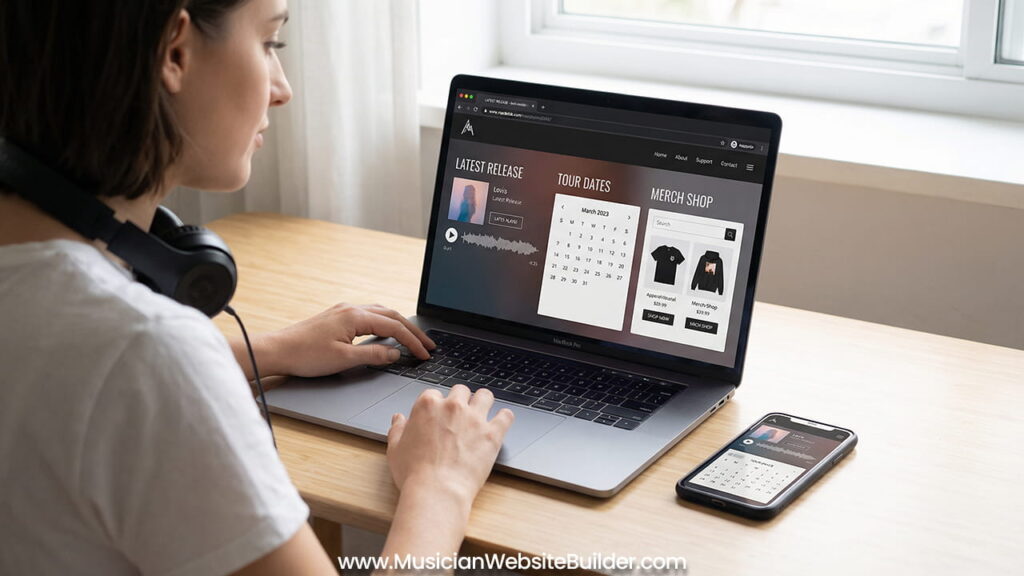
The homepage should show a clear image and the latest release. It should also include a mailing list signup at the top. Next, the music page must offer streaming and purchase links. Then, the tour page should show updated dates. Syncing with tools helps keep it accurate.
Also, a store page is important. It should allow easy checkout for products. Finally, a contact or EPK page should be available. This helps press and booking teams connect quickly. Keeping these pages clean improves user experience.
What is an EPK and Why It Matters
An Electronic Press Kit, or EPK, works like a resume. It presents an artist in a professional way. People in the media and booking have very little time. So, the EPK must be clear and direct.
It should include high-quality photos. Both horizontal and vertical formats are needed. A short bio and a longer version should also be added. Videos are important too. At least one live performance video should be included.
In addition, press mentions or achievements should be listed. These can be links to reviews or charts. All these elements help others understand the artist quickly. So, a strong EPK increases the chances of opportunities.
Best Platforms for Building a Music Website
Choosing a platform depends on skills and goals. Some artists prefer simple tools. Others want more control.
Bandzoogle is built for musicians. It offers tools like stores and EPK templates. So, it saves time. Squarespace focuses on design. It allows easy drag-and-drop editing. Therefore, it works well for visual artists.
On the other hand, Shopify is best for selling merch. It supports large sales and strong store features. So, artists who focus on products may choose it. Each platform serves a different need. The right choice depends on the artist’s plan.
How to Collect Emails Without Being Annoying
Email marketing still works very well. It helps sell tickets and products. However, people do not like spam. So, artists must offer value first.
Instead of asking for signups directly, something useful should be offered. For example, an unreleased demo can attract fans. A behind-the-scenes video can also work. Early access to merch is another good option.
Also, placement matters. The signup form should be easy to find. It should be visible near the top of the homepage. If fans cannot see it, they will not join. So, both value and placement are important.
Why Mobile Optimization is Very Important
Most people use phones to browse websites. In fact, over 80% of visitors come from mobile devices. So, mobile design is not optional.
If a site loads slowly, users leave quickly. A delay of more than three seconds can cause loss. Also, buttons must be easy to tap. Small buttons create frustration.
Therefore, a mobile-friendly design improves results. It helps users stay longer and take action. This includes buying tickets or listening to music. So, mobile optimization is a must.
How to Improve Website SEO
SEO helps people find a website easily. When someone searches for an artist, the official site should appear first. Otherwise, other sites may take that spot.
Using alt-text is important. Images should include simple descriptions. Metadata also matters. Titles and descriptions should include genre and location.
In addition, regular updates improve SEO. Search engines prefer active websites. Even small updates help. For example, a monthly post can increase visibility. So, consistent activity improves ranking.
Selling Merch: Direct vs Third-Party
Selling merch directly is better in most cases. It allows artists to collect fan data. This includes email addresses. That data helps with future promotion.
Third-party platforms handle sales easily. However, they often keep customer data. This limits future marketing options. Artists cannot reach buyers again.
Using print-on-demand services can solve this problem. These services can connect to the artist’s own website. So, artists keep control and still sell easily. Direct selling supports long-term growth.
How Often Should a Website Be Updated?
A website must stay fresh. Old content creates a bad impression. So, regular updates are needed.
Tour dates should be updated immediately after confirmation. The homepage should change with every new release. This keeps the site current.
Also, the bio should be updated once a year. It should reflect new achievements or changes. Regular updates show that the artist is active. This builds trust with fans and industry professionals.
The Biggest Mistake Musicians Make
Many musicians over-design their websites. They add too many effects or animations. This slows down the site and hides important content.
Fans usually want three things. They want to listen to music. They want to see tour dates. They want to buy merch. If these actions are hard, the website fails.
So, simplicity works best. Clear design improves user experience. Fast access to key features increases engagement. Therefore, less complexity leads to better results.
Summary Checklist for a High-Performing Site
A strong musician website follows a few simple rules. First, the mailing list must be visible. It should appear at the top of the homepage. Next, streaming links should be easy to access.
Site speed is also very important. Images should be compressed before upload. This helps pages load faster. The EPK should always be ready. A downloadable version adds extra value.
In conclusion, building a website is more than a technical task. It creates a permanent home for music. It gives control over data and content. By focusing on simple design and mobile use, artists can build a stable future.