Today, music is not only about real people on a stage. Instead, digital artists now play a big role. Over time, the gap between real and digital has become smaller. Projects like Gorillaz and K/DA show how this change works. Also, many independent VTubers now create music and stories online. Because of this shift, a website is no longer just a place to share updates. It becomes the main space where the artist’s world exists.
Creating this kind of digital space needs a new way of thinking. Instead of normal web design, creators must build a full story experience. This means every page, color, and feature should match the artist’s universe.
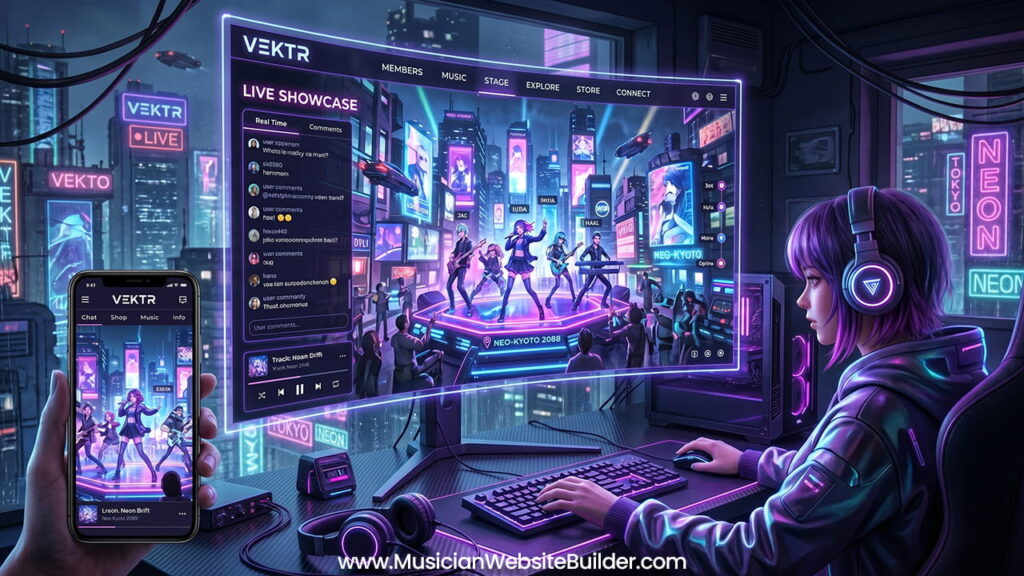
The Digital Home: More Than Just Social Media
Social media platforms like YouTube, TikTok, and Spotify help artists reach people. However, these platforms are not fully controlled by the artist. They are like rented spaces. So, changes in rules or design can affect how content appears.
A website solves this problem. It gives full control over design and content. Because of that, the website becomes the official home of the virtual band. It keeps the story safe and consistent.
In addition, a custom website can look very different from social media pages. It can feel like a lab, a city, or even a fantasy world. This helps fans connect more deeply. They do not just listen to music. They explore a full experience.
As a result, fans start to value both the music and the story. This builds a stronger and more loyal community over time.
Designing for the Lore: UI and UX That Tell a Story
Most websites focus on speed and simplicity. That works for normal businesses. However, virtual artists need something more. They need immersion.
UI (User Interface) and UX (User Experience) must work together to tell a story. Every button, animation, and page should feel like part of the world.
Interactive Environments and WebGL
Modern tools like WebGL allow developers to create 3D environments in browsers. This changes how users interact with websites.
For example, instead of reading a simple “About” page, users can explore a virtual studio. They can move around and click on objects. Each object can show sounds, videos, or character details.
This method turns passive users into active participants. It keeps them engaged for longer periods.
Gamification: Making the Experience Fun
Fans today enjoy interactive content. Because of this, gamification works well for virtual band websites.
Gamification means adding game-like features. These features make the experience more exciting.
Hidden Areas and Clues
Some websites include locked sections. Fans must find clues in music videos or posts. Then, they use those clues to unlock secret content.
This creates a sense of discovery. It also encourages fans to explore more deeply.
Interactive Discographies
Albums can become interactive. Instead of just showing songs, clicking an album can reveal extra content. This may include 3D models, unused lyrics, or character notes.
Dynamic Backgrounds
Some websites change based on time. For example, the design may look different during day and night. This reflects the virtual world’s timeline.
These features help build a stronger connection between fans and the story.
Technical Foundations for High-Traffic Media Sites
Virtual band websites often include heavy content. High-quality images, videos, and scripts can slow down performance. So, developers must balance design and speed.
Image Optimization
Images should use modern formats like WebP or AVIF. These formats reduce file size while keeping quality. This ensures fast loading without losing visual detail.
Content Delivery Network (CDN)
Fans come from all over the world. Because of that, loading speed must stay consistent. A CDN helps by delivering content from servers close to the user.
This reduces delays and improves user experience.
Mobile-First Design
Most users visit websites on mobile devices. However, 3D features work better on desktops. So, developers must design for mobile first.
This means keeping the experience smooth on smaller screens. Even with fewer effects, the core feeling of the world should remain.
SEO for Fictional Entities: Competing in Real Search
Virtual bands face a unique challenge. Their names and stories may not exist in search engines at first. So, they need a smart SEO strategy.
Entity-Based SEO
Search engines understand connections between topics. Because of this, linking virtual artists to real-world elements helps.
For example, connecting the band to music genres, voice actors, or tools like Unreal Engine improves visibility.
Long-Tail Keywords
Using specific phrases also helps. Terms like “interactive virtual artist experience” or “digital band backstory” attract curious users.
These users often look for new types of content. So, they are more likely to engage.
Engagement and Monetization: Turning Ideas Into Income
A strong website does more than tell a story. It also supports income generation.
Digital Merchandise
Virtual bands can sell digital items. These may include skins, outfits, or artwork. Fans enjoy owning items connected to the story.
Community Features
Adding community tools improves engagement. For example, Discord integration or fan-art sections allow fans to interact.
This builds a sense of belonging. Fans feel like part of the world.
Manual Ad Placement
Ads can bring revenue. However, too many ads break immersion. So, careful placement is important.
Using ads that match the theme helps maintain the experience. This keeps users engaged while generating income.
Conclusion: The Future of Virtual Identity
Virtual artist websites are more than simple pages. They act as bridges between ideas and communities. By focusing on storytelling, design, and performance, creators can build complete digital worlds.
As technology improves, these worlds will feel even more real. Over time, the line between digital and real identity will continue to fade. Because of this, websites will play an even bigger role in shaping how fans experience music and stories.