A musician’s website is more important than ever. Social media platforms can change their algorithms at any time, but a website stays fully under the artist’s control. That is why successful musicians use their websites as more than just an online profile. A strong website becomes the main place for fan engagement, music promotion, industry connections, and sales.
Building a website from scratch may seem difficult at first. However, using a clear process makes the work easier and more effective. This five-step method helps create websites that are fast, user-friendly, and optimized for search engines.
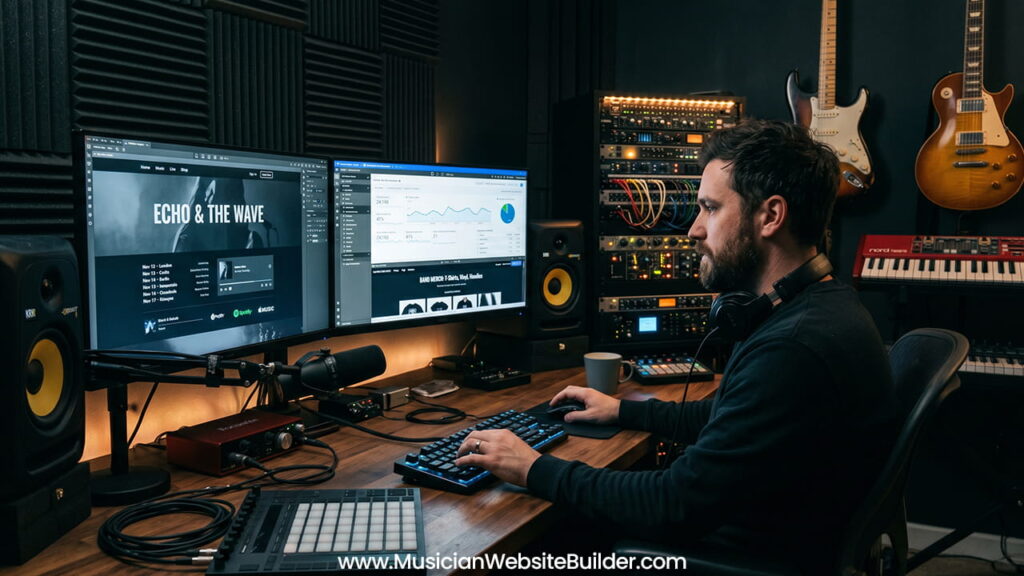
Step 1: Strategy and Visual Identity
Every successful website starts with planning. Before development begins, the first step focuses on understanding the artist’s identity and goals. A musician’s website should match their sound, image, and overall style.
Creating the Right Look
The design should connect with the artist’s music and branding. This includes choosing the right colors, fonts, and images. Many musicians already have album artwork or visual themes that help guide the design direction.
Defining the Main Goal
Each website should have a clear purpose. Some artists want to increase merch sales. Others want to promote tour dates or grow their email list. Every design choice should support these goals.
Expert Design Advice
High contrast design works very well for musician websites. Dark themes are common in the music industry, but readability must always stay a priority. Text should remain easy to read, and important buttons like “Buy Tickets” or “Listen Now” should stand out clearly from the background.
Step 2: Building the Technical Foundation
A visually attractive website is important, but performance matters just as much. Fans expect websites to load quickly, especially on mobile devices. Slow websites often cause visitors to leave before exploring the content.
Fast and Reliable Hosting
Choosing the right hosting service improves speed and stability. Low latency and strong uptime help ensure the website stays available and responsive for fans around the world.
Technical SEO Structure
Clean website architecture helps search engines understand the site properly. Organized code and proper structure make it easier for search engine crawlers to index pages like music releases, lyrics, and tour information.
Website Security
SSL certificates are an essential part of every professional website. They protect visitor information and also help maintain search engine rankings. Security should never be ignored during development.
Step 3: Creating the Core Pages
Over time, certain website pages have proven essential for both fans and search engines. These pages help visitors quickly find important information while also improving website visibility online.
Home Page
The homepage should immediately show the artist’s identity. A strong visual, featured release, and upcoming tour dates help visitors understand what is happening right away.
Music Page
Fans want easy access to music. Integrated streaming players from platforms like Spotify and Apple Music improve the user experience. Direct purchase links also give fans more ways to support the artist.
Bio or About Page
The bio page tells the artist’s story. It should include important keywords related to the musician’s genre, style, and location. This helps improve search engine visibility while also building a stronger connection with visitors.
Online Store
A merch store gives artists direct control over product sales. Many musicians prefer commission-free setups because they keep more profit from each sale compared to third-party marketplaces.
Step 4: The EPK – A Professional Industry Tool
One of the most valuable parts of a musician’s website is the Electronic Press Kit, also known as the EPK. While fans may not use it often, industry professionals rely on it heavily.
Journalists, festival organizers, booking agents, and record labels often check the EPK before making decisions. A well-organized EPK shows professionalism and preparation.
High-Resolution Media Assets
Professional EPK pages usually include downloadable promo photos in both vertical and horizontal formats. Stage plots and other press materials are also useful for live event planning.
Artist Bio Versions
Short and long biography versions help different media outlets. Short bios work well for social media and quick introductions, while longer bios fit magazine articles and printed features.
Embedded Video Content
A high-quality live performance video or official music video helps demonstrate the artist’s performance quality. Video content gives industry professionals a better understanding of the artist’s stage presence and overall presentation.
In many situations, a professional EPK can strongly influence booking and partnership opportunities. It shows that the artist is organized, serious, and ready for professional work.
Step 5: SEO and Fan Conversion
Launching a website is only the beginning. The final step focuses on helping people discover the website and encouraging visitors to take action.
Lyrics SEO
Dedicated lyrics pages can generate strong search traffic. Fans often search for specific song lines or phrases. When those lyrics appear on the official website, the artist gains direct traffic instead of losing visitors to third-party platforms.
Event Schema Markup
Schema markup helps search engines display tour dates directly in search results. This makes it easier for fans to find concerts, locations, and ticket information quickly.
Building an Email or SMS List
One of the most valuable parts of a musician’s website is audience ownership. Email and SMS signup forms help artists stay connected with fans without depending completely on social media platforms.
Simple pop-ups or footer signup forms can increase subscriber growth without interrupting the user experience. A direct contact list gives artists long-term communication control even if social media trends change later.
Building a Long-Term Digital Presence
A musician’s website should do more than look good. It should support long-term career growth, fan engagement, and business opportunities. Following a structured process helps create a website that is both visually strong and technically effective.
With the right strategy, technical setup, page structure, EPK system, and SEO planning, a musician’s website becomes a complete digital home. Instead of depending fully on social media platforms, artists gain direct control over their audience, brand, and online presence.