Automation is no longer optional now. It is a basic need. Businesses in hospitality, healthcare, and services rely on smooth booking systems. So, connecting a website to an external booking system using an API helps turn user interest into confirmed bookings.
This connection keeps availability updated in real time. As a result, it reduces manual work and removes common human mistakes. Because of this, businesses can focus more on service instead of handling bookings by hand.
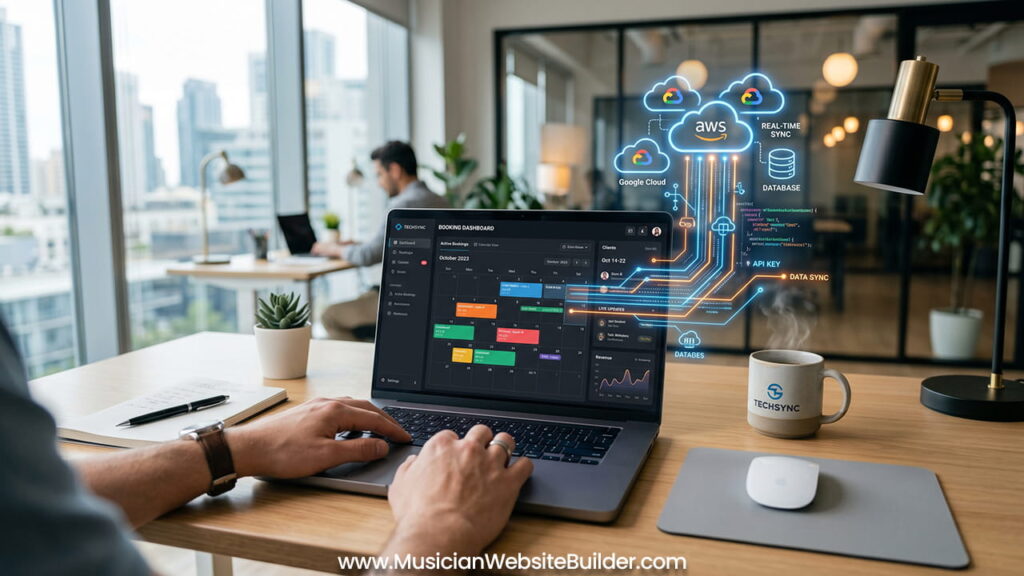
Understanding How Booking APIs Work
Before starting the technical setup, it is important to understand how communication happens between systems. A website and a booking platform must work together clearly and safely.
What an API Does in Booking Systems
An API works like a messenger. When a user selects a date on a website, the site sends a request to the booking system. It asks if that time slot is free. Then, the booking system sends back a response with the answer.
Because of this process, the website can show live updates. So, users always see correct availability without refreshing the page again and again.
Main Parts: Endpoints, Methods, and Payloads
Successful integration depends on three key parts.
Endpoints are specific URLs where requests are sent. For example, an endpoint may look like /v1/availability. Each endpoint has a clear purpose.
Methods show what action is needed. For example, GET is used to check available slots. On the other hand, POST is used to create a booking.
Payloads contain the data being sent. Usually, this data is in JSON format. This format is simple and easy for systems to read and process quickly.
Benefits of Using External Booking Systems
Using an external system instead of building one from scratch has many benefits. These advantages make the process faster and safer.
Better Security Standards
External booking platforms often handle sensitive payment data. Because of that, they follow strict rules like PCI-DSS. This keeps customer data safe and reduces risk for the business.
Easy Scaling
These systems are built to handle large traffic. So, even during busy seasons, the system works smoothly. This prevents crashes and slow performance.
Connected Tools and Systems
Most booking systems connect with tools like Google Calendar or CRM platforms. As a result, all data stays in one place. This creates a clear and reliable system for managing operations.
Step-by-Step Integration Process
A clear workflow helps avoid errors. Each step plays an important role in building a strong connection.
Choosing the API and Setting Up Authentication
First, select a booking API that fits the business needs. Most platforms provide a sandbox environment. This is a testing space where developers can try API calls safely.
During this stage, authentication must be set up. This step ensures that only approved users can access the system. Common methods include OAuth 2.0 and Bearer Tokens. These methods protect the booking data from unauthorized access.
Data Mapping and Field Matching
Next, match the website data with the API requirements. This step is very important.
For example, a website may collect a full name in one field. However, the API may need first name and last name separately. In this case, a small data transformation must be added.
Because of this mapping, the system can send correct data without errors.
Using Webhooks for Real-Time Updates
Instead of checking the API again and again, webhooks provide a better solution.
A webhook allows the booking system to send updates instantly. For example, if a booking is canceled, the system informs the website immediately.
This reduces server load. At the same time, it keeps the website updated without delay. So, users always see accurate information.
Common Problems to Avoid
Even with a good setup, some issues can happen. Knowing these problems helps prevent them early.
Handling Delays and Double Bookings
In busy systems, two users may try to book the same slot at the same time. This creates a race condition.
To solve this, atomic transactions are used. This method locks the slot as soon as one user starts booking. So, no second booking can happen for the same time.
Because of this, the system avoids double booking errors.
Keeping Data Secure
Security must always be a priority. API keys should never be placed in the front-end code. If they are exposed, anyone can misuse them.
Instead, API calls should go through a server-side system. This hides the keys and adds another layer of protection.
Also, all data must be encrypted using HTTPS or TLS. This keeps information safe while it travels between systems.
Following Privacy Rules
Every system must follow privacy laws. If user data is handled, rules like GDPR or CCPA must be followed.
Because of this, businesses must ensure that their booking provider also meets these standards. This protects both the business and its users.
Conclusion
Connecting a website to an external booking system is a smart move. It improves user experience and reduces manual work. At the same time, it keeps data accurate and secure.
By focusing on proper authentication, real-time updates with webhooks, and strong security practices, businesses can build a reliable booking system.
In the end, a well-integrated API turns a simple website into a powerful tool. It supports growth, saves time, and helps manage bookings without stress.